597. Can You Learn Telepathy? Sean McNamara on Psychic Development & Remote Viewing


Join us on a fascinating spiritual journey as we explore the realms of psychic development and remote viewing with Sean McNamara.
This conversation is going to make you think and expand your understanding of what is possible! We get into the mysteries of telepathy and the possibility of learning this extraordinary skill.
We talk about how as you navigate the path of spiritual awakening, intuition, clairvoyance, and higher consciousness become increasingly important in unlocking your full potential.
Sean shares his insights on how to cultivate psychic abilities, and we examine the role of remote viewing in expanding our understanding of the universe.
If you're on a path of soul growth, a consciousness shift, or simply looking to deepen your spiritual practice, this conversation will inspire and enlighten you.
Enjoy this journey of discovery, exploring the frontiers of human consciousness and the potential for awakening to new levels of awareness and perception.
Tune in to discover the secrets of telepathy and the transformative power of psychic development.
Connect with Sean McNamara: https://www.MindPossible.com
👇 Explore More:
🌐 Website: https://www.soulelevationpodcast.com
✨ Courses & Events: https://www.karagoodwin.com
▶️ YouTube: @soulelevationpodcast
📲 Instagram: @kara_goodwin_meditation
🥸 Facebook: Kara Goodwin Meditation
💼 LinkedIn: Kara Goodwin
Other episodes you'll enjoy:
578. Autism, Healing & Shamanic Wisdom | The Horse Boy Story - Rupert Isaacson
564. 3 Near-Death Experiences, Dimensional Consciousness, and Blueprint Rewiring - Masati
Support the show:
Visit karagoodwin.com to get a signed copy of my book, your free meditation, learn to meditate, get a personalized energy transfer/meditation, and learn sacred geometry!
Visit my sponsors page to see all deals on things I love and support the show!
Timestamp:
00:00 Welcome
01:02 Meet Sean McNamara
01:22 Show Support and Links
02:06 What Is Mindsight
04:06 Blindfold Proof Stories
05:53 Sean’s Psychic Origin
06:30 OBE to Telekinesis
09:34 Teaching Psychic Skills
12:12 Sovereignty Over Dogma
16:04 Remote Viewing Protocol
22:24 Feedback and Target Pitfalls
24:21 ETs and Nonlocal Mind
27:30 UFO Telepathy Story
29:05 How Impressions Arrive
32:18 Psychic Data in Pieces
34:03 Aphantasia and Sensing Targets
35:19 Remote Viewing Limits and Targets
37:12 Associative Remote Viewing Explained
38:56 Therapy and Everyday Synchronicity
41:59 Psychedelics Spark Musical Awakening
43:48 Meaning as the Hidden Driver
50:40 Lottery Wins and Universe Pushback
56:24 Music, Singing, and Connection
01:00:44 Intensive Details and Farewell
☕️ You can also buy me a coffee. ☺️
Connect with me:
Loved this episode? Leave us a review and rating here:
https://www.soulelevationpodcast.com/reviews/new/
YouTube: https://www.youtube.com/@soulelevationpodcast
Thank you for listening and supporting this content. 🩷
0
00:00:00,000 --> 00:00:08,000
Welcome to Soul Elevation: Guiding Your Ascension to New Heights. I'm your host, Kara Goodwin. Did you know that you can train yourself to see without using your eyes? This is exactly what Sean McNamara did, and he's taught many others to do the same. I took a workshop on this in Sedona last spring, and then I did an online workshop with Sean later because I was so fascinated about
honing this ability. In this episode, you're gonna hear about clairvoyance, remote viewing, telepathy, and so much more. I was also fascinated by how much of what Sean shared, and even how we were dressed, were reflections of things going on in my world. It seemed like the universe was making a point to me the whole time we were recording that we are all truly connected and telepathically
1
00:01:00,000 --> 00:01:08,000
communicating even when we don't mean to. Sean McNamara is a clinical mental health counselor, a hypnotherapist, psychedelic guide, and meditation teacher. He's also helped people experience their psychic potential for over a decade. He offers training based on his own experience with out-of-body experiences, telekinesis, remote viewing, and telepathy. We'll begin very shortly, but first, I want to invite you to explore everything available for you at karagoodwin.com. Be sure to
check out my book, Your Authentic Awakening, And you'll also find a selection of free guided meditations to strengthen your spiritual side. And thank you so much for your support of this show. Your likes, comments, shares, and subscriptions genuinely help this work reach more people. So go ahead and hit the like button or subscribe while you're thinking about it. All right, let's begin. Enjoy this episode. Kara: Well, welcome, Sean. I'm so excited to have this discussion with you
2
00:02:00,000 --> 00:02:08,000
today. Thanks for coming on Soul Sean McNamara: Yeah, you're welcome, Kara. Thanks for inviting me to be here. Kara: So I have been exploring Mindsight through your book, as well as a workshop that I did in Sedona at the Sedona Ascension Retreat, and then followed up with a live, a, a live online workshop with you. I find this incredibly fascinating. The work you're doing is just really interesting. start by
talking about what Mindsight is. Sean McNamara: Sure. So I-- And that's a great question, 'cause I've started expanding the defi-definition of that with my most recent book. But initially, I refer to mindsight as the ability to perceive visually without the use of the physical eyes. Um, and that term had already been around, so I was borrowing the term. I didn't invent that term. So this is about training people
3
00:03:00,000 --> 00:03:08,000
using blindfolds to perceive colors and shapes and things like that. And I started doing that years ago and wrote that book about it. And most recently, I've been focusing in the last few years on telepathy, which in my latest book I call Mindsight 2, because with telepathy, you're also picking up visual information. And, and it's a really interesting question, too. When someone is doing the first kind of mindsight, maybe we could call it
clairvoyance. That's really what it is, it's clairvoyance. But if someone else is in the room or if they're training with a partner, how do you know for sure that the person with the blindfold on isn't reading their partner's mind? Because they can see what card they're holding. So mindsight is really-- It comes down to clairvoyance. Telep-- What is telepathy? It's clairvoyance with two or more minds involved. So it all boils down to that essential
4
00:04:00,000 --> 00:04:08,000
psychic perception of clairvoyance, which can be used in different ways. Kara: Right. And, and to let people in on the power of what we're talking about, because it's one thing to talk about it as a sighted person. You know, when, when I've played around with this, I'm gonna put in quotes, but, um, because I do like the lightness, the levity that you bring to the
training. but, you know, as a sighted person, it's, it's, one thing to kind of see some color or experience like, "Well, did I see a flash of a circle?" Or, or whatever it might be. But when I was in the workshop, uh, there was a blind person, and not only was he blind, but he did not have eyes. Like, he had plastic, uh, eyeballs had not been able to see since
5
00:05:00,000 --> 00:05:08,000
he was about four years old. And then they did a se- several demonstrations with him with holding different cards up, and he was still blindfolded. But he was able to track, and he'd only been doing it for a few months. This was the other thing. It's not like he'd been training this way for years. But he could track it. You could see him taking his finger and tracking the shape describing, you know, that's a triangle or it's
a circle. And so the implications of this are, are just fantastic and kind of mind-blowing. but it is really interesting what you say where, where does the line, you know, the blurred line between is it that we're seeing it? Is it that we're picking up on somebody else's thoughts? And does it matter? But it's, it's still really fascinating. Um, if we go into your own history, have you always had psychic skills, or was this
6
00:06:00,000 --> 00:06:08,000
something that you had to completely train Sean McNamara: Yeah, I call myse-myself like the slowest horse, the worst student. I've-- And even today, I don't mind telling people I'm not particularly psych-- I'm not more psychic than anybody else. I'm not one of those super psychics or anything like that. I, I started training myself years ago. Maybe this was back in 2013 or 2014 or maybe a little before that. In my f-
my first psychic endeavor was to have an out-of-body experience. That's really what I wanted to do. I didn't have any interest in anything else at the time, but I had had this lifelong insecurity about death and there not being anything that continues afterward. And, uh, I'd been raised in a certain religion, but I, I wasn't satisfied with just taking on a belief system. I'd studied a different religion, but also that
7
00:07:00,000 --> 00:07:08,000
didn't really answer my question satisfactorily, and I was just stubborn and frustrated, and I thought, "I gotta figure this out on my own. I'm not gonna rely on religion." So I started reading books about having out-of-body experiences, and I just started following the instructions that I read in these books. Um, and really, I'll just, for the audience, the, the most powerful book that I read was by William Buhlman, "Adventures Out of the Body." If I got that right. The author is William Buhlman.
Get his first book. It's great. Um, and I trained really, really hard for months, and I'd already had a strong background in meditation training, um, from my own spiritual path. And so I combined my meditation with these techniques, and I was training two, three times a day. Luckily, I had a job where I had a lot of flexibility with time, and I could, you know, go home for lunch and then train after lunch and let myself drift off into a semi-sleep state as part of that training. So after months of
8
00:08:00,000 --> 00:08:08,000
training really hard out of frustration and stubbornness and really wanting to get to it, I had my first out-of-body experience. And in that moment, my anxiety about there not being something more after death dissolved. And I ke-kept training and having out-of-body experiences. And after a while, you know, my curiosity was satisfied and, and I thought, "You know, what else is out there?" And I started just seeing these videos about telekinesis or moving objects from a
distance. So it's a subcategory of, or it's a category of psychokinesis, meaning, you know, movement by the mind. So telekinesis is across the distance. And I thought, "I'm gonna learn how to do that." And I watched a bunch of videos, and I, again, I re-related it to what I knew from my own meditation training and did a lot of experimentation, again, for months, working really hard at it, and hadn't had any success. And one night I went to sleep, and I had this image as I
9
00:09:00,000 --> 00:09:08,000
was drifting to sleep that suddenly the object that I was trying to move with my mind, it's-- I saw it moving in my mind, which is interesting. You know, it's a semi-dream state. Like, suddenly I see it. The next day is when I had my first successful movement. So this tells me that something inside of me had to change in order to make it possible for it to occur in, in my waking world with my waking consciousness. So I probably had some belief system tucked way back in there or some fear or something
that had prevented my success. So I succeeded, kept training, and I thought, "This is something I can teach people," 'cause you can't, you can't demonstrate an out-of-body experience. What, you're gonna see someone laying on the floor. There's nothing to see. There's nothing to see there. But with telekinesis, you can-- I can get a room full of people. Each gets their own object and everything, and within two hours, they're moving the object with their intention and their attention and their
10
00:10:00,000 --> 00:10:08,000
relaxation. It's just a particular way I developed for training people. And after a while of that, I thought, "What else, what else is there?" And I, you know, started learning about remote viewing. And everything I learn also, I just am inclined to teach it. I've alw- I've always had that quality, I think probably since childhood, that I just enjoy sharing with others. And so, the out-of-body experience, I did teach workshops, and then with telekinesis, I taught that, remote
viewing, whatever I could learn, I would turn around and teach it. And eventually, that spread into clairvoyance and that kind of mindset where you're wearing the blindfold and just getting people together and fostering that ability. And for the last couple years, I've, I've been focusing on, on telepathy the very same way. And whatever I learn, I just turn around and teach it to people 'cause it's really not that difficult. I think the, the gift of me being a really difficult
11
00:11:00,000 --> 00:11:08,000
student, the slow horse, is that I see all the routes that don't lead anywhere. I s-- I, I, I make all the mistakes that people don't need to make because I can just help them avoid those mistakes, and here's the easy way to achieve that effect. So, um, yeah, so I'm not naturally gifted or anything like that. I have to work really hard. Uh, sometimes I'm a little jealous when I meet someone who just comes to them so quickly, but, you know, it's nice that-- for them that it happens. It's been really
great. The greatest gift of all this isn't the psychic stuff. It's connecting with people and seeing that light bulb light up over their head and, "Ah," and, and the meaning it contributes to their life. For me, that's really what this is about. Kara: That's so beautiful. It's really interesting to, to tune into your story and how, you know, you've described it as being hard, and you worked hard, and you were really dedicated to it, and it took a while. having read "Mindsight," you're very much
12
00:12:00,000 --> 00:12:08,000
like, "Go easy on yourself, guys. You know, y- if, if you don't feel like you're inspired to do it, don't do it, you know. And maybe, you know, maybe the ways that Sean McNamara: Yeah, I'm kind of a little too hard on myself, but the
reason I take that approach when I work with people or write my books is because I come out... In my adulthood, I changed from my religion of birth to a different one, worked with a couple of spiritual teachers, and found that dogma,
13
00:13:00,000 --> 00:13:08,000
all it does is it serves the organization or the tradition or the religion. It doesn't actually serve the indivi- the individual practitioner's journey because people are unique. But if, you know, I'm training as-- If I'm a member of religion X It needs boundaries to say, "This is what we are. This is what we represent. And if you want to be part of us, you have to do it this way." And most religions aren't particularly concerned if whether or not you actually succeed.
It's just we all do the same thing, we all look alike, and that's what makes us, us. Which has a social function that in terms of a unique individual person's development, they cannot be put in a box that way. No one should be forced into a box or that if they think about something differently, that they're wrong and this other authority figure is right. There's so many problems that occur with that, that mindset. So I'm coming out of-- Really, I'm coming out of being
14
00:14:00,000 --> 00:14:08,000
hurt from s- from some of these things that happen in dogmatic organizations or spiritual traditions. And so that's, that's sort of like my secret mission when I train people, is to help them realize that they have it all within them. The answers are within them. They don't have to obey anyone's rules unless they want to. You know? Some people can make that choice, uh, if it benefits them. But really, I wanna help people set themselves free and, and find out that
they're already empowered from within. We are all intrinsic parts of this universe. We just are. We-- Just by existing, we belong in this universe. We are part of this universe. We are part of this greater consciousness. And so we-- I think it's like a basic, I wanna say not human right, but a consciousness right to go out and try different things and don't let anyone tell you there's only one way to do it, right? Kara: Mm-hmm. Mm-hmm. Mm-hmm. Sean McNamara: Yeah.
15
00:15:00,000 --> 00:15:08,000
Kara: that. And, you know, your, your story is-- I have reflections of your story in my story too. So for me also, sovereignty is so important, and it's a, it's a watch-out for me if I see somebody trying to hook in, and there are very subtle ways that, that, that happens and, but I had the complete opposite as I've engaged with your materials. It's very like, this if it's helpful," you know, like I said.
But, but it's funny because I, I also have been wounded in that way and, and as such have such a-- put such a high Priority on sovereignty and not getting caught up into dogma. So think from my perspective, it's one of the tenets of spiritual growth and development. Like, we can only go so far until we really have to claim our sovereignty and be empowered, and until we're ready to do that, we will hit a
16
00:16:00,000 --> 00:16:08,000
ceiling. um, so I really appreciate that. with mindsight, you mentioned remote viewing, and there is some similarities and some differences between the two. But can you go into, um, how they-- how mindsight and remote viewing are related and also how they Sean McNamara: Yeah. They're related in that at their root, it's clairvoyance. Be- being able to perceive things at a distance
without actually being there. And remote viewing gets more specific, though. It's not just clairvoyance. And this is really important because I'm referring to the remote viewing that was developed in the United States Army, and the CIA has used it, and, um, Stanford Research Institute, all those peop- you know. So I'm-- That's how I'm using that word, because these days, people are
17
00:17:00,000 --> 00:17:08,000
using that term f- to represent other ways of working with the mind. So I'm, strictly speaking, this type of remote viewing is clairvoyance with a protocol, and it is this protocol that makes it remote viewing. And what is the protocol? The protocol is that there's a specific task. So it's not spontaneous, like, "Oh, I was driving in my car, and I saw where I lost my purse." This is a general example, you know. Or, "I had a dream, and then it came true
the next day." Th- these are unplanned. Remote viewing is planned. There's a time you sit down and do it. There's a specific target that's selected, and there's a process of, uh, in many traditional cases in remote viewing, receiving a coordinate that someone else has selected, and this coordinate is, could be a random set of six digits, but it can be used in different ways. Um, in one of my books, I use letters as the coordinate. But it's just a, a
18
00:18:00,000 --> 00:18:08,000
representation, a symbolic representation of the target for the viewer to focus on. So when they focus on these numbers or these letters on the coordinate, they, it helps direct their mind to send their mind out in space and time. So remote viewing is not only about seeing a target in the present, but it could send the mind into the past, it could send the mind into the future. And then another important aspect of the protocol And, and it's obvious, it should be obvious that whoever's doing
the viewing does not have any clue what the target is. No hint whatsoever. In some training contexts, they c- there could be something called front-loading, where, oh, this is about an event, or this is about a person, or this is about a location. A well-trained viewer with a lot of practice can do that and it won't screw up their session. But a beginner, their mind will take that information and run with it, and they'll start guessing and send them off track. So in this case, the best, the
19
00:19:00,000 --> 00:19:08,000
best approach is that the viewer has no idea whatsoever what the target is. Someone else has chosen it. And then finally, they sit down, they do their session. They might have a-- be trained in a particular way of how they write down their impressions. Maybe first they get the general gestalt, you know, the overall feel. Is this something about the ocean or land, or there's a biological... Is it a person, or this is about something, or there's an overwhelming emotion or a feel to it. And then they write down descriptions,
and then at a later stage, they might sketch. They start sketching things that represent what's coming to them. So there's a protocol within the protocol of how you start writing down your impressions. And with practice, it's a great way to get the very subtle stuff that's occurring in the subconscious and conscious mind down on paper. And that's the other aspect of the, the protocol is that it's recorded. What the viewer is perceiving is recorded. It doesn't have to be written down necessarily. They could speak
20
00:20:00,000 --> 00:20:08,000
it into a recorder. They could speak to someone who's monitoring and taking notes for them. But it's put down like, "Okay, this is what you got." So later on you can't say, "Oh, that's what I saw." If you didn't report it now, doesn't count later. And then finally, the-- and perhaps the most important stage of this protocol in remote viewing is called feedback. And it's basically checking to see if your impressions are accurate. So you're shown the target. Maybe it's a picture that was hidden in an envelope, or maybe it's a
location and you get taken to the location. See, this is what you were trying to perceive. This is what the coordinate was assigned to. Let's look at your notes and see how it matches up. And so feedback is important for training purposes so that a person with repeated sessions can tell when an impression is-- feels accurate, when it doesn't. And generally, especially for beginners, when it feels like this couldn't possibly be it, it's probably more accurate than when you're like, "Oh, I'm certain this is what it is." That's,
21
00:21:00,000 --> 00:21:08,000
that's usually the left brain thinking, the prefrontal cortex. You know, rational mind is starting to guess, and it feels so confident about that. So it's better to trust the stuff that you don't trust when you're first learning remote viewing, right? So by getting the feedback, you can see your notes and see which ones tended to be connected to the target and which ones didn't. And so that's just a brief description of the protocol. So again, remote-- what is remote viewing? It's
clairvoyance with a specific protocol. Um, and then the mindsight with the blindfolds, you know, at this point, it's still such an early phenomenon. It's spreading wildly. A lot of people are teaching it now and doing it in different ways, which is a good thing. It's still the Wild West with psychic abilities, right? 'Cause a lot of discovery happens that way when people try different things. But the protocol there is that someone's gonna wear a blindfold and someone else is gonna be holding a
22
00:22:00,000 --> 00:22:08,000
target. Uh, in my book, I show ways people can train by themselves too, right? So there's-- I wouldn't call it a protocol, but there are instructions for how to work with yourself or how to work with a partner or how to work with a group. But it's still quite open-ended, and it feels quite casual, which is a nice thing. It's so easy to just, "Hey, I wanna train for 15 minutes by myself this afternoon." And easy-peasy. With remote viewing, you need at least one partner, and even with that there are issues because
maybe your partner selects the target and they give you a coordinate, and you might think, "I'm gonna focus on this coordinate and send my mind to that target." Well, what if you're just reading the mind of your training partner who already knows what the target is, right? I saw a video a long time ago, and I don't remember the name of the remote viewer, but this is one of the real big deal people in remote viewing. And he did an experiment working with people. He assigned them a coordinate, and the target was a place
23
00:23:00,000 --> 00:23:08,000
that he made up in his mind. It was complete fiction. But he had created this image in his mind with all the details about the buildings and the location and all the stuff happening there, and that's what he focused on, and that's what the remote viewers got. A completely made-up thing. The other reason I, I say feedback is really important, and it's connected to this thing that they were perceiving something that wasn't real, is that a lot of people use that term
remote viewing and they say, "Oh, I remote viewed the, the bases on the dark side of the moon." Well, maybe. How are you gonna get the feedback on that? Are you gonna get in a s- space shuttle and fly out to the moon, take some photos and, and get that feedback? Or someone's, "I got feedback about the Loch Ness Monster," or excuse me, "I got-- I did a remote viewing and saw the Loch Ness Monster." How are you gonna get feedback that that's accurate? Or are you
24
00:24:00,000 --> 00:24:08,000
just gonna want people to believe that you accurately perceived the Loch Ness Monster? And I'm not saying that the Loch N-Ness Monster is or is not real. I'm not saying there are or aren't bases on the dark side of the moon. But I'm just saying these are examples of targets that are not great targets because you can't get reliable feedback on them. Kara: Yeah. it's so fascinating, and I was just last night listening to an interview with, I wanna say his
name was John Buchanan It was but Sean McNamara: Oh, okay. Kara: viewer. Do you know Sean McNamara: and I'm spacing the first name. God, I'm so sorry. Yeah, yeah. Yeah. Kara: the, in the-- I don't know if it was the CIA, government, you know, he was in the government program, very, very elite remote viewer. And he shared in this interview, because they started talking about ETs, extraterrestrials, and I think the question was something around, you think that
25
00:25:00,000 --> 00:25:08,000
ETs are telepathic with humans?" And he had experienced that. He had ex- had some remote viewing targets that where he was, remote viewing ET bases not knowing what the target was. Just like you're saying, you, you're given a blind target, you don't know anything about what it is, but that's what he got. he has done research, um, kind of related to remote viewing, but not necessarily just with remote viewing.
But he hypothesizes that races, and of course they're, they all, all have different skills and, and they're, you know, different species are built different ways. But, you know, they're quite telepathic, and some species are very telepathic. But the, the interesting thing with humanity is the ability to remote view. We don't have to be anywhere near the location to be able to pick up on the thoughts or to
26
00:26:00,000 --> 00:26:08,000
telepathically perceive. he was saying that, um, there are a lot of abduction or ET contact, like with a UFO, and the UFO kind of has to get right above person before they start understanding what's going on or tuning into the fact that they're there at all from a human perspective. It's like they have to be very close to them to then start picking up, and to feel like
they're receiving. so again, like whatever research he has done, whatever contact he has had, he is hypothesizing or, or has been told um, the human, it's the uniqueness with the human that we can go forward in future, backward in, in the past, and that we don't have to be located anywhere near the target, and we can, you know, train ourselves or have that communication and
27
00:27:00,000 --> 00:27:08,000
that connection non-locally. So I, I thought that was really fascinating that I, I hadn't considered the uniqueness of that. And you started by saying, you know, you c- you can go in forward in time, backwards in time. It can be the moon, it can be, you know, and whatnot, Sean McNamara: Yeah. Yeah. Oh, it's Lynn Buchanan, by the way. It came to me. L-Lynn. Yep. Mm-hmm. Yeah. Kara: you. Yeah. Sean McNamara: Yeah, and
I, I'll tell you, I, I can tell you one story about UFOs and telepathy briefly. Just years ago, I was spending some time focusing on that, and I'd gone to a skywatching group here in Colorado. And the person leading the group was talking about how sometimes you'll see the fli-- flash bulb, like when a UFO just appears in the sky, and then it flashes. And he says, "What you can do to make sure it's legit," "is ask them.
28
00:28:00,000 --> 00:28:08,000
Mentally ask them to do it again and see what happens." And so you can do it as a group. There's a flashbulb. The whole group says, "Do it again, please," and see if it does. And I've done it on my own where I'd asked them three times in a row, and it flashed. And so what's happening there? how am I making that request? There's a connection there. A lo-- I know a lot of people, this won't be a surprise to half your audience probably, that, um, that there seems to be that telepathic connection
with those entities. Of course, when we're talking about spirit too. When we're talking about mediumship, what is that? That's telepathy. In fact, and I say this 'cause there, I've people close to me who are orthodox in their religion, who think that telepathy is evil, and my typical response is, "What do you think you do when you get on your knees and you make your hands go like this, and you look up at the cross and make a request or give thanks? That-- You're using your mind to communicate,
29
00:29:00,000 --> 00:29:08,000
right?" Yeah. Kara: Yeah. It's so interesting. And so what is it like for you, and also is there like a, a traditional way that this shows up for people? But when you're remote viewing or you're using mindsight or you're experiencing telepathy, I've heard you or read talk about like sometimes it's like a window opens up, I believe, but not
always. And the way that I understand it is that it is the reading of subtle energies and subtle communication. So it's really kind of you know, not always as obvious as like a window opening up inside your mind where you're just like, "Oh, okay, I'm here now, and I can very clearly see there's a ladder over there and there are some shelves
30
00:30:00,000 --> 00:30:08,000
over there and there's a, a jar there or whatever." But tell us what, what you experience when you, when you engage with this type of Sean McNamara: Yeah. First, complete anxiety that it's not gonna work. Almost every single time. And then I'm, you know, uh, surprised, which I'm grateful for, that it does work. Um, so it's, it's v-- it is very subtle in my experience. I'll use a, an anal-- um, a metaphor.
So let's imagine that you're standing by a calm pond of water, and there's a tree nearby, and you grab a tree branch, and you, you drag it across the surface of the water to make a, a line in the water. So for just a moment, there's a division of the water and there's the impression of a line, and then the water closes up very quickly, and there's no sign of the line. It's like that in the mind. And
31
00:31:00,000 --> 00:31:08,000
so that's why recording is very important, that when stuff comes in, whatever it is, don't judge it, don't analyze it. That slows the whole process down, and by then the conscious mind is getting in the way. But whatever comes, you write it down as soon as you can. Capture that impression because it is so, so, so subtle and ephemeral. And so that's really-- And it comes in pieces, right? So when I teach telepathy classes, I use simple-- One way I teach it is by using
simple line drawings, and I train people first to discern f-fundamental shapes. Like what is a triangle? What does that feel like psychically? Or what does a circle feel like? And then I, then I do complex, more complex line drawings as targets. But I tell my students, "Do not guess what the, what the target is. Don't try and capture an entire image. If you get a little squiggle, write that down. If you get maybe a circle or the impression of multiple of the same things,
32
00:32:00,000 --> 00:32:08,000
write that down. But don't try and get a nice holistic image of the target. Your brain will just guess." Because what happens more often than not is that people get pieces, and later on they can engage their conscious mind and see how the pieces fit together when they compare it to the target, which is important. And I'm talking about neurotypical people, right? People like, I'm assuming you're, don't identify as a neurodiverse person. Because there are, you know, and I'm sure a
lot of people are already aware of the telepathy tapes that talks about autistic children who are extraordinarily psychic, and they do see things all at once. They are extraordinarily psychic. So I'm talking about people like you and me. For us, it comes in pieces, and I think there's something really important about that. There's something-- You know, I, I sort of wish I had a bunch of neuro Educated, like neurobiologists or people who studied how the brain and consciousness work
33
00:33:00,000 --> 00:33:08,000
together. Because this is about association. The brain-- It might still be a mystery how the brain binds things together. Like we see through the eyes, we hear through the ears, and we feel through the skin. But where in the brain does it occur that it puts all those impressions all together at the same time, at the same speed to create a whole experience? How does it associate those different experiences, those different phenomena into
a single experience, right? And so I think in telepathy, how we-- and in clairvoyance and in remote viewing, when we get pieces together, this is showing us how the brain is parsing out data or information from the psychic space. And maybe it, it has something to teach us about how the brain, even an ordinary awake consciousness, how does it parse out information? How does it put things together? How does it consolidate information to
34
00:34:00,000 --> 00:34:08,000
create a holistic human experience? Kara: Yeah. It's, it's so fascinating because you mentioned, like, as you were talking about how you teach it, what does a triangle feel like, is what you said, and what does a circle feel like? So that implies the... And I've been through your workshop, so I understand this, but just, uh, uh, for listeners, you know, it implies that it is this of communication in a number
of ways, not just trying to see it with the mind. So where-- W- what does-- What's the word where you can't see it? Is it auto, uh, um, Sean McNamara: Oh, apha- aphasia? Kara: aphasia Sean McNamara: Or, like that. Yeah, yeah. Yeah, some people, if I, if I say try and, try and imagine a red apple in your mind right now, it doesn't work for everybody. Not everyone can do that. Uh, can they smell? Can they smell a
35
00:35:00,000 --> 00:35:08,000
fruit? Maybe. Can they imagine-- Can they remember what it tastes like? Maybe. Can they remember what it feels like to hold an apple? They might be able to remember what that is like. But to see the image of an apple in their mind, not everyone can do that. So everyone has to find their unique way of perceiving it. So. Kara: for you, after all the training that you've been through- Now, because when I took your workshop, we were picking up, it was really just
like any impressions you get, write them, sketch them, whatever. then we compared that with what the target was, and that was really fascinating because it, you know, might have been like a lightning bolt or something, and there were sharp edges, and there maybe was like a, a bright light that, you know, somebody might... I'm kind of making this up. But, um, but it was interesting to see with all the different participants came up and how it related to the h-
36
00:36:00,000 --> 00:36:08,000
to the target. as you go deeper into remote viewing, you are trying to pick up on, and you're trying to put it together. Like you were saying with the, it'd be interesting to talk to a remote, uh, to a neurologist to understand, like, how are we getting, like, where, what is putting the sound and the visual and the color and the feeling and all of that together to make one complete thing? Um,
how does that develop you go through remote viewing training? Because at this point, are you able to kind of up on complete scenes your Sean McNamara: No, I mean, me personally, uh, I'm-- So I'm self-trained mostly. Um, I have gone to some groups, but mostly I'm self-trained, so I'm not a extraordinarily well-developed remote viewer myself. So, uh, it's really when I sit down and do it, it's at
37
00:37:00,000 --> 00:37:08,000
about the same level. Some sessions are better than others. It's like anything else. You have good days and bad days. It depends on stress level and things like that. It also depends on the quality of the target too. Some targets are better than others, especially with something called associative remote viewing, where you're using remote viewing to predict the future. Um, you need good targets for that because if you have two potential targets, let's say two pictures in two different envelopes, but you're only
gonna be shown one for your feedback. Let's say this envelope means that the Denver Broncos win tomorrow's football game. There's no game tomorrow, but just... And this, uh, the picture in this envelope, I'll show it to the viewer if the Broncos lose tomorrow. But right now I Kara: interesting Sean McNamara: I want the viewer now to send their mind into the future to see which picture I'm gonna show them, 'cause then that'll tell me what's gonna happen with the Broncos, right? But what if, what if the viewer had
38
00:38:00,000 --> 00:38:08,000
her honeymoon in Paris ten years ago, and one of the targets is the Eiffel Tower, and it's not the picture I'm gonna show them tomorrow 'cause it doesn't represent whatever the outcome is from the football game. But their mind really loves Paris And it's gonna go to that target because the mind always actually knows what both are. The mind is that powerful. Even though it's only gonna be shown one, and I've seen this time and time again in associative
remote viewing classes that I've led and in groups that I've been part of, if the mind has a preference without sufficient training, it's gonna go to that target and deliver you that information instead. So you need two targets that aren't particularly connected to the viewer, and they both have to be equally interesting and have the same kind of energetic attractiveness to them too. Yeah. Kara: so interesting. Oh my goodness. So you mentioned in the
39
00:39:00,000 --> 00:39:08,000
beginning that you don't consider yourself psychic and, you know, you're just kind of the average person in that regard. But as you've gone through this training and you have developed your clairvoyance and other skills, your telepathy, do-- ha-have other skills kind of come along for the ride? Have you been surprised by things that you haven't necessarily trained in, but they-- your, your perceptive abilities have improved in some way? Sean McNamara:
You know, I don't, I don't know if the psychic training has done that except that-- And it's not that I'm not psychic, it's just I'm not super psychic, you know? Um, and I'm not really interested in that at this point in my life anyway, and that's a whole other conversation. But what, what I do experience is that psychic experiences occur more often. So I'm a therapist. That's what I do for a li-- that's my, that's my day job. I help people with trauma,
40
00:40:00,000 --> 00:40:08,000
with depression, anxiety, with different kinds of process addictions. And sometimes it. Sometimes someone's gonna tell me about a song that their mother used to sing him, and the s- I hear the song in my head, which is right at that level of that's a cute parlor trick. And I don't bring it up in session. I don't tell them, "I know what you're gonna say. Look at me, I'm being psychic." You know, I don't do that. I just
notice that and go, "Of course." I'm focused entirely on this person for an hour straight. Of course, I'm gonna feel from within what they're about to say. I think where it's more valuable is the times when there's a light in the room, and I sort of ask them about that, and we start talking about a deceased family member, and then the client says, "You know, I do feel them in the room." A- a- actually, there's one client
41
00:41:00,000 --> 00:41:08,000
who, um, twice... And, and she, she has people on the other side, but twice a little white feather appeared near the ceiling of my office and just floated down. There are no feathers in my office, but twice a feather appeared in the ce- near the ceiling and just . Kara: Wow. Sean McNamara: maybe part of why that stuff happens more frequently for me than it used to is because of my training. I'm open to the possibility
that things like that can happen. I'm not as afraid of them as I maybe used to be. I don't know if I ever really was terrified of it, but some part of me, especially because of my upbringing, was trained to think it's bad or it's not real or whatever. So that stuff is always functioning, but maybe it's a lot weaker now because of all the training I've put myself through and the experiences I've had. One thing that has
42
00:42:00,000 --> 00:42:08,000
changed me probably more specifically and directly is, uh, my experience with psychedelics, um, which, which started in my life because of a study that I did a few years ago w- of combining psychedelics with psychic abilities. So I did a year-long study. It was actually two six-month studies. One was with a group of people helping them microdose psilocybin and then testing them every week on psychic abilities. The second six-month
study was me doing large doses of psychedelics and doing psychic tests. Uh, but during the first six months, I started microdosing too, and, um, this is all in one of my books, so there were test results and everything too. But something happened through the microdosing that suddenly, after a few months of microdosing, my brain woke up this musical part. I fell in love with instruments that produced, overtones. So overtone
43
00:43:00,000 --> 00:43:08,000
instruments. My brain could not get enough. I started playing the jaw harp, which I only found out later it's like a shamanic instrument in some cu- cultures. It's very powerful for putting you in a trance and bringing you deeper within yourself. And now, you know, I've, I've gone back to playing the guitar. I'm learning the banjo. I'm playing keyboard. I'm playing other instruments and putting them together. This part of me opened up because of my experience with psychedelics, and it's
just not closing up, and it's put so much richness in my life. And I do wonder if the music also makes me more sensitive in other ways, too. Is there something about music and being, being tapped in, feeling in a certain way, which I never did before, and also being more sensitive psychically? And I-- the common theme there is about meaning. Lately, that's something that I think about all the time, especially with psychic phenomena. Why does that happen sometimes? Other times, why doesn't it
44
00:44:00,000 --> 00:44:08,000
happen? Because it doesn't always happen, right? And I think it has something to do with the universe being on a grand mission to produce meaning into existence. And I think it uses-- I think psychic phenomena is one way that it does that. And so when I'm doing psychic experiments with friends or with a group, if meaning needs to be produced, if the universe deems it necessary or sees it as an opportunity, I think it, I think it steps in
and helps the psychic thing happen. But, and I've said this elsewhere, like, if I'm doing the same experiment and the universe is like, "Mm, do you really need to do that again?" The experiment just doesn't work or it doesn't work as well as it used to. And so I think there's something about meaning. And th-this might sound strange 'cause we s-- you hear the word meaning as like something means something or, yeah, my children give meaning to
45
00:45:00,000 --> 00:45:08,000
my life. But there's something much, much deeper about the nature of existence itself and the fact that somehow the universe, our galaxy, our solar system and planet Earth has produced three pounds of wet gray matter inside our skulls that can combine phenomena to produce meaning. Uh, you know, it's the kind of thing that after a while I-- what else can I say? It's just you chew on it and it gets more subtle and more mysterious, but there's
something really important there. Kara: Yeah. I, I love that you're bringing this up because it's really reflective of some thoughts that I was having just today, earlier today. um, because I'm gonna be seeing somebody that I haven't seen for a very long time, and I'm excited to see them. and we'll-- It'll be one of those like, "Oh my gosh," like, "What are you doing these days?" types of things because we just, you know... Because that's just
46
00:46:00,000 --> 00:46:08,000
how it is. um, Try-- And I've changed a lot since I knew this person well. And, um, and that's what kinda kept coming back because it makes me reflect upon myself like, "What am I doing these days?" And of course, like, I know what my day-to-day is like, but from the outside in, to explain it, and especially somebody who's not spiritually awakened, so doesn't value the things that I would share with somebody who is spiritually awakened, you know,
who just would get it in a different way. When you're dealing with somebody who gets so much value from like, "Well, what-- how is your career? How are you successful? How-- what..." You know, not that it-- this person wouldn't be like, "Well, how-- what kind of money are you making?" Or whatever. But all the regular, like, indicators of success that I had a lot more of those indicators of success when I was in the corporate world, and not the
47
00:47:00,000 --> 00:47:08,000
same now. It's just a different level of meaning. but that I kept coming into that like, that... 'Cause I was kinda thinking of it from the outside and kinda questioning myself, like, how does that make me feel? um, and within me it was like, gosh, my life is so much more meaningful me. I derive so much more meaning out of, uh... And meaning, meaning, meaning just kept coming up when I was having this, like, inner conversation
with myself. But that was me looking at me from the outside. But then I was kind of looking at me from the outside from somebody else's perspective that doesn't, you know, doesn't have the same-- doesn't put value on the same things that, that I would. so then it's like, well, would that even resonate with some-- with everybody? Like, that I feel deep, deep meaning and purpose with my life even if it doesn't translate into
48
00:48:00,000 --> 00:48:08,000
definitions of success. don't know. So it's really fascinating that you're driving home so much right now with the meaning piece. It's also fascinating to me that we are wearing identical colors. I was like-- As I keep looking at you, I'm like, "Oh my gosh, we're twinsies." when you were talking earlier about the remote viewing and you gave an example of... And you were just like, you have some sort of target and I just immediately
s- thought in my mind water, and you said, "I mean, it could be the ocean. It could be..." You know, like, but you were, like, trying to drill down, and I, uh, the, immediately when you're like, "It could be something like," and I th- I just was like, "Water," in my head, and then you said, "Ocean." there have been all these things like that where I'm like, "Wow, you are really reflecting back to me all this inner stuff that is coming
49
00:49:00,000 --> 00:49:08,000
through." And, and I bring that up because it's such a, it is so relevant to what we're talking about. It's, it's relevant to the, the fact that we are all connected, and even though we're not trying to telepathically connect with each other, there, there is a lot going between the two of us that is unsaid that I'm picking up through what is said. So it's a beautiful reflection of the bigger discussion
that we're having. Y- Sean McNamara: Mm-hmm. Mm. Mm-hmm. Mm-hmm. Mm-hmm. Kara: I love mind-bendy stories and, um, you know, when you're in the realm of telepathy and clairvoyance, you know, there just might be some, some things that surprise you or some stories that you've had over the years of things where you're ... And, and you gave one, um, where you were talking about the, the Eiffel Tower,
50
00:50:00,000 --> 00:50:08,000
that phenomenon where you have associated remote viewing and somebody, you know, y- they get the, they get the target accurately, but it's actually the wrong target, the fact that it's, uh, connected with their, their emotional connection with the object or, or their deep connection to that specific wrong object. Does anything come up in terms of things that, that kinda surprised you or wowed you or really made you be like, "What the heck is
going on here?" In, as you've, uh, worked with this type of perception? Sean McNamara: Oh. Hmm. You know, there's, there's one thing that I've, I've talked about in other interviews. It, it's y- I have a group of friends here in the Denver area that we, we play together all the time, and a lot of my ideas that I use in the programs that I teach come from the experiments I did with my friends. So I really owe them a lot. Um, but back in 2019, I
51
00:51:00,000 --> 00:51:08,000
think, we, we used the Pick 3 lottery. So it's not a big jackpot. It's like an $80 jackpot, right? But it's a perfect random number generator. So if you're trying to predict will the number zero be drawn or not drawn, will the number three be drawn or not drawn, it's a perfect random number generator. So it's not about the money. It's just a good experiment. But we, twice that year, used associative remote viewing as a group to, to buy winning tickets, which is really fun. But th- and this is where the meaning thing comes in 'cause those
times were meaningful, and we kept pushing it. So there are plenty of times that we didn't win, and there are a couple of those times when we didn't win, what would happen is we'd be in my living room doing the experiment, and then it's time to go buy our tickets before the numbers are drawn. And, you know, my friends would scatter to go get lunch and then go buy their tickets. And this one particular day, they all came back, and in one case, the machine at the gas station refused to spit out a ticket. Someone else went to a, a grocery
52
00:52:00,000 --> 00:52:08,000
store, and their whole lottery system was down. Someone else went somewhere else, and there was a problem there. And, and there was just a feeling like the universe is pushing back, going, "Mm-mm." And that's happened at least two times when w-we went out to buy tickets, and it-- in different ways, the universe was not letting us buy the ticket we wanted or buy it when we want it. It's like we had to-- we were delayed. In, in a couple of cases, the
numbers ha- were to be drawn at a certain time, and for a unknown reason, the numbers were delayed by an hour or two. You know, and it's like w- we're trying to hack it, and something's pushing back saying, "Mm-mm. Mm-mm." And I know it's a little bit solipsist to think that there's an, a glitch in the system because me and my 10 friends were doing an experiment. But maybe, I don't know, 'cause if we, if we did hack it, what would, what would that
53
00:53:00,000 --> 00:53:08,000
change? And would it take away meaning, or would it have some other unintended effect? Who knows. It reminds me of a time I was doing, when I was doing remote viewing and telepathy, um, under the influence of psychedelics. And, um, this one experiment I was on, I think I was on LSD this time, and I was having one of the best telepathy sessions ever. My wife was in another room focusing on a target, and I'm getting these perceptions, and it was
pretty darn accurate. But at a certain point, I kept reaching for more, and it's like I felt this force come down and just, like, shut me down. Like, "Mm, lights out. Nope. That's all you get." And I, and I don't, uh, and I'm not saying this with fear or, like, it was something evil or anything like that. But there's-- I have to respect it. I have to respect it. And what, what I respect most of all, especially on the theme of meaning, is that,
54
00:54:00,000 --> 00:54:08,000
uh, we have these physical existences and these bodies for a reason. There are experiences we can have with these bodies and these limitations that we cannot have in the disembodied state. So there are lessons that we can learn only with this body. And if there was ever a time in my life when I wanted to become super psychic and read anyone's mind and all that, that's long gone because I realize it's in the friction,
it's in the struggle, it's in the work, it's in the not knowing that meaning is produced, that discovery occurs, that love is made by the distance, by the reconnection, by realizing we've always been connected. But we can only realize it when we feel that separation, which is made possible by-- This sounds like a commercial. Made possible by the physical-- By, by having a physical body, right? Brought to you by
55
00:55:00,000 --> 00:55:08,000
humanity. know. So it's, it's a real gift, and that's really why I'm not concerned about becoming particularly super psychic or anything like that. Like, no. I tell you what, I'd rather just be I'm more focused on learning the banjo right now than I'm becoming more psychic, right? Because that's what's bringing me more authentic meaning. Not that there's anything wrong with wanting to be psychic, because that could be someone's path, and it was mine
for a while. But in Buddhism, there's a saying that once you cross the river, burn the rafts, burn the canoes, right? And I'm not saying I'm gonna burn the psychic stuff. It, it served a fu- function for me for a while. I can let it go and find what is the next thing that's gonna enrich my life. For some people, it could be needlepoint, or it could be pottery, or it could be writing, or, um... I, I think there are some natural limitations to how
56
00:56:00,000 --> 00:56:08,000
much being really psychic can bring a person. But some people can make a career out of it, too. So to each their, to each their own, so it's not my place to judge. Yeah. Kara: like, non-dogma of, like, "This served me well. It served me. I'm not gonna push it I, you know, I'm not gonna bleed it dry. I feel like it was complete, and I feel Sean McNamara: Yeah. Kara: come up in our conversation. You started talking about all the instruments, and before we
joined for, uh, this call, I, I've, I got a gong recently, and I don't get a lot... Just where I placed it and everything, I don't play it that much or I don't, like, strike it. But I just so happened to... I had a few minutes, so I was like, "Oh, I'm gonna do some Sean McNamara: Like Kara: And I was exploring different... Oh, look at that. Sean McNamara: this? Kara: actually a Sean McNamara: like the hanging. Okay. Kara: yeah. but, you know, with a gong, you
57
00:57:00,000 --> 00:57:08,000
can strike it. You can, you can really bang it and get that the big sounds. But you can with just striking it lightly over and over and, noticing how they, you know, how it changes based on where you hit it, how it, uh, bleeds into each other one after another, and, and how the waves kind of find each other and what that feels like, what that sounds like. But also, you can ru- run the, uh, mallet along
the outer edge, and it makes a very, like, spacey sound. And so I was just playing with it. I don't know... I don't, quote unquote, "know how to play a gong" if there's a, if there's a way to know how to do it. But it was very organic, like, playful. that and, and this sounds interesting. And now, okay, as I'm not striking it but the waves are still going- How do I feel? Now how, how is... What is my dog
58
00:58:00,000 --> 00:58:08,000
doing? What is, you know, uh, does it, it feels like things have, like, cleared out. There's this perceptual feeling that has changed. Something has shifted. So just interesting, again, because it's not something I make time for that much. but I did do it right before we met, not knowing that you are ... were gonna bring up music today, and your own kind of connection with music that has organically come up that's been so meaningful for
you. But I had just given myself five minutes or something to connect in that way, in a way of just exploration, just, you know, feel, like, what does this feel like? What does it sound like? How, you know, what is it doing that I can perceive? Because I know it's doing a lot more that I can't perceive, too. So really interesting. Sean McNamara: I even use music in my, um, in my intensives. So when I train with people for a week straight
59
00:59:00,000 --> 00:59:08,000
on developing telepathy, one thing I have them do is sing songs together, which is really awkward for people in the beginning. But there's, there's such a power 'cause if telepathy is about connection, singing together helps us feel more connected to each other. Also, singing in a group reduces stress. It can have healing effects for people with trauma histories, right? It's, it's a cultural thing. Our-- This modern American culture is lacking
in so many ways, right? But maybe that's, maybe that's one benefit to organized religion where singing does occur in groups. There is a benefit there, psychologically speaking. So I use singing, um, when I teach psychic perception to, to help in that way. So it's that, it's that powerful, yeah. And it's, it's... Yeah. Kara: that that would be something related to telepathy? so ... This is such a mysterious isn't Sean McNamara: Yeah. Yeah.
60
01:00:00,000 --> 01:00:08,000
Kara: help ... I mean, of course it helps to connect us, but I wouldn't have made that connection on my own of, like, oh yeah, if we sing together, that's gonna help us in the endeavor of becoming more telepathic and tapping into those skills. Sean McNamara: and I I choose songs that, at least for me, they open my heart. I hope they touch other people's hearts. Like, uh, David Bowie's "Heroes" song. I, I don't know about you, but every time I hear that and if I'm in the car, I'm like
on the edge of tears, right? 'Cause it's so inspiring. songs we sang and, um, you know, other songs like that. And some songs are designed also to just shake us out of our stiffness too and drop, drop our, drop our, egos a little bit. Kara: Yeah. Sean McNamara: yeah. Kara: I love it. Well, speaking of intensives and the work that you do with other people, please tell people how they can connect with you and learn from you and find out Sean McNamara: Sure. Um, just go to mindpossible.com
61
01:01:00,000 --> 01:01:08,000
and that's, that's where they'll find most everything. So yeah. Kara: Do you ha-- And you've got something coming up in September in Colorado, I Sean McNamara: Yeah, it's a week-long intensive. We do still have spaces available. I'm co-leading it this time. This is my first time ever co-leading with an amazing teacher, Wendy Gallant. She's gonna lead the portion on seeing without eyes. And for her, she, she labels it seeing beyond eyes. She's an extremely talented teacher. I'm so excited to work
with her. I'll be focusing on the telepathy and of course there'll be a lot of crossover. We're gonna do everything together. And so to spend, spend a week in the Rocky Mountains with this group, I'm so looking forward to it. And we, we do still have some spaces left. Yeah. Yeah. So you should come. Kara: Yeah, you know, I've thought about it. I, I need to check the dates, so. Good. Sean McNamara: Yeah. Kara: you so much, Sean. It's such an honor and a joy to be with you here today. I've really
62
01:02:00,000 --> 01:02:08,000
Sean McNamara: Oh. Oh, thanks so much. This was a lot of fun. Thanks. Thank you so much for joining me for this episode of Soul Elevation. If someone in your life would be inspired or uplifted by what you heard today, please take a moment to share this with them. These are the kinds of conversations that ripple out and elevate
collective consciousness. And if you haven't yet, be sure to subscribe so you don't miss the powerful episodes ahead. Your presence, energy, and support truly help amplify this mission of raising frequency and anchoring in a more awakened humanity. Thank you for your support, and I'll see you for the next episode of Soul Elevation
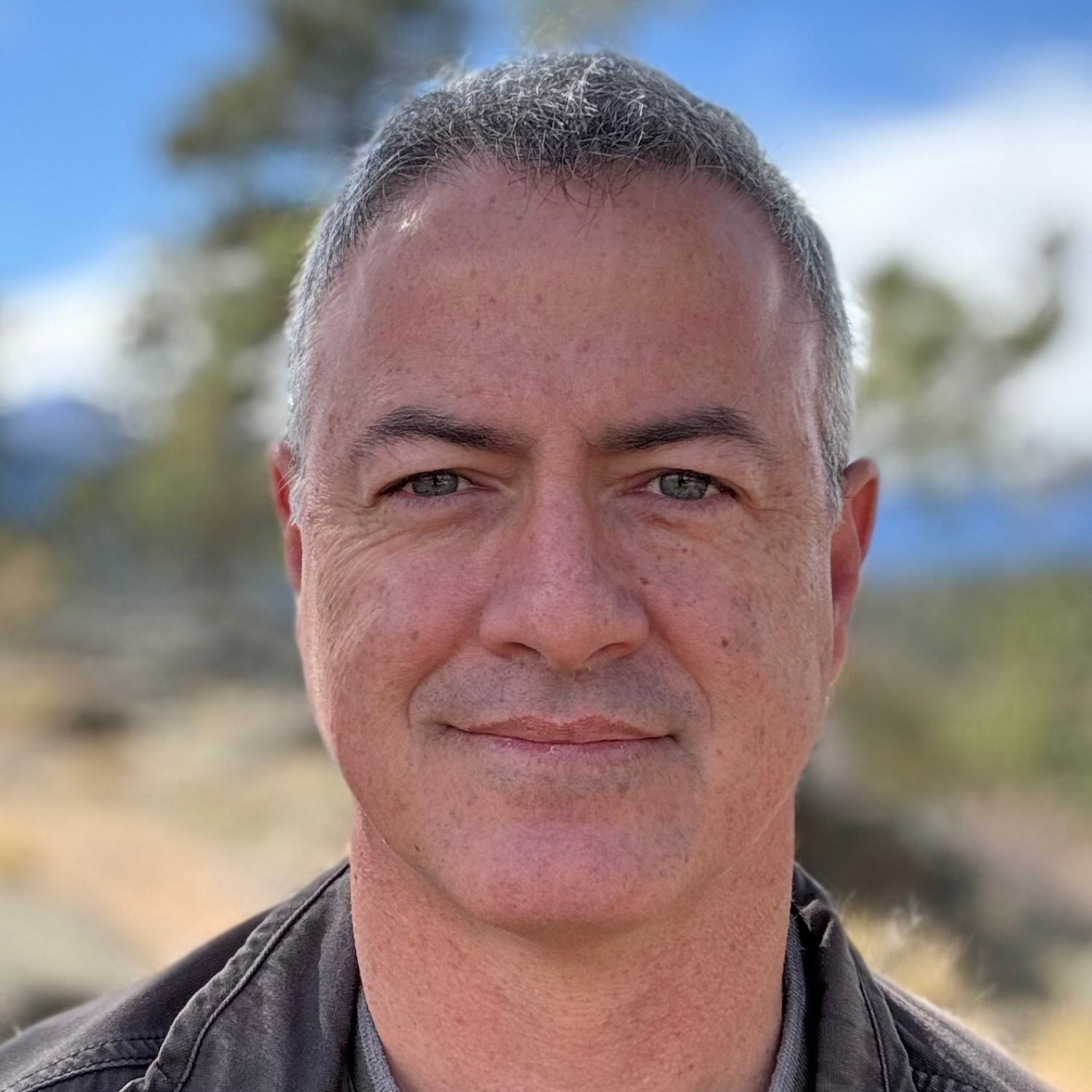
Teacher and Author
Sean is a clinical mental health counselor, hypnotherapist, psychedelic guide, and meditation teacher. He has also helped people experience their psychic potential for over a decade. He offers training based on his own experience with out of body experiences, telekinesis, remote viewing, and telepathy. His 11th and most recent book is "Telepathy Training for Neurotypicals: The Estes Park Session." His next major intensive is happening this September in Colorado, where he and co-teacher Wendy Gallant will be teaching telepathy and "seeing beyond eyes." You can learn more about him and the intensive at www.MindPossible.com.