Can You Visit the Afterlife in a Dream? - Robert Moss
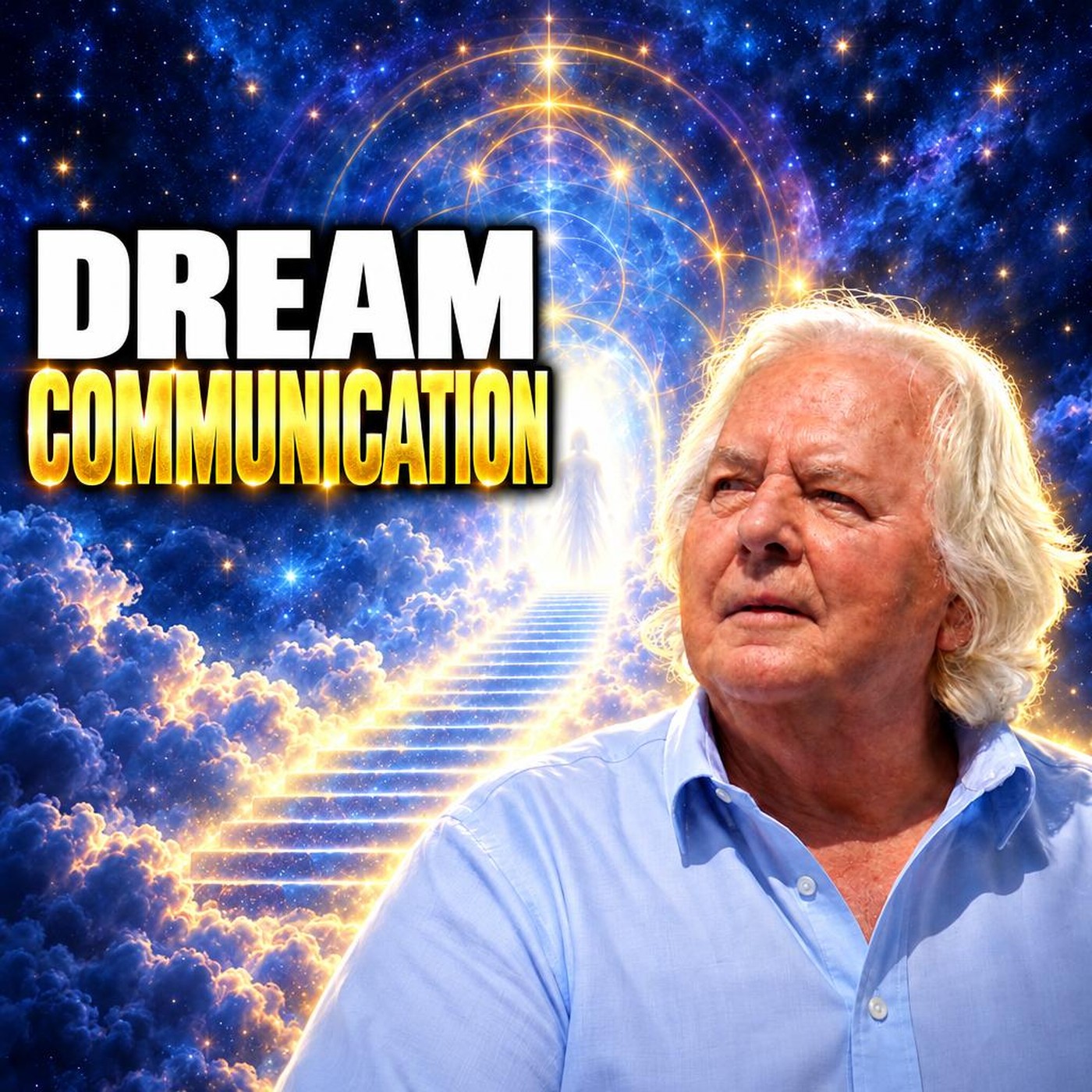
Psychopomp and the Afterlife: Robert Moss on Dreams, Death, and the Journey of the Soul
Death might not be something to fear after all, but something we can actually befriend. Our dreams are preparing us for the journey beyond this physical life, and what if the people we've loved and lost are much closer than we realize.
In this fascinating episode of Soul Elevation (#647), I welcome back renowned dream teacher, shamanic practitioner, and bestselling author Robert Moss to explore the ancient practice of psychopomp, the mysteries of the afterlife, and the extraordinary potential of our dreams. Robert's perspective challenges many of our conventional beliefs about life, death, and consciousness. Drawing from his own near-death experiences (NDEs), decades of dream exploration, and encounters with what he understands to be beings beyond the physical world, he challenges us to reconsider the very nature of reality. And even more importantly, he reminds us that preparing for death can actually help us live more fully.
What Is a Psychopomp?
The word psychopomp literally means "guide of souls." Throughout ancient spiritual traditions, psychopomps have are beings or guides who help souls navigate transitions between worlds, particularly the passage from physical life into the afterlife.
But Robert Moss expands this understanding beyond the moment of death. He shares that soul guidance is something we all need throughout our lives. We may experience what shamanic traditions call soul loss, a sense of losing access to parts of our vital energy or identity through trauma, difficult experiences, or overwhelming circumstances.
So psychopomp work isn't just about helping the deceased. It's also about recovering our own wholeness, strengthening our connection to the soul, and becoming more conscious participants in our spiritual journeys. Robert's approach includes learning to navigate nonordinary realities, connect with higher guidance, and develop a deeper relationship with death itself.
Robert shares that we can develop a relationship with death rather than spending our lives trying to avoid thinking about it. When we release our fear of death, we become better equipped to handle the challenges of living.
Instead of seeing death as an ominous ending, Robert encourages you to see it as a transition between worlds. He even shares experiences of encountering death as a personified being, including an extraordinary meeting with Yama, the Lord of Death in Hindu and Buddhist traditions. During a train journey through New York's Hudson River Valley, Robert describes entering a visionary experience in which Yama appeared to him wearing black and carrying a lasso. What followed was an extraordinary conversation about life, death, and the possibility of negotiating with death itself.
These encounters are not simply symbolic exercises. They are meaningful experiences that can change our relationship with mortality. How might our lives change if we stopped treating death as an enemy?
Are We Already Living in the Afterlife?
Robert turns our lived experience upside down by pointing out that we are already in the afterlife. Our souls existed before entering physical bodies and will continue their journeys after leaving them. Our present lifetime is simply one chapter in a much larger story.
Robert references a Buddhist teaching that compares life to a bridge. We are meant to walk across it, not build our permanent home upon it. This offers a profound shift in how we approach our daily experiences. When we remember that our existence extends far beyond our current circumstances, the difficulties and dramas of everyday life can begin to lose some of their weight.
This doesn't mean our experiences are unimportant. Rather, it encourages us to participate fully in life without becoming so attached to its temporary conditions. Robert calls this bringing a sense of divine comedy into our existence, allowing us to experience life with greater curiosity, courage, and even humor.
Dreams and the Afterlife: Can We Visit Other Realms While Sleeping?
Robert has spent decades developing his approach to Active Dreaming, which combines modern dreamwork with ancient shamanic practices. He says that dreams are far more than random images generated by the sleeping brain. Dreams can become gateways into other dimensions of consciousness, where we may encounter deceased loved ones, spiritual guides, and environments that feel as real as our waking world.
Dreams are opportunities to explore the landscapes of the afterlife while we are still physically alive. This is particularly meaningful when considering our relationships with people who have passed away. Many people report vivid dreams of deceased family members or friends, sometimes experiencing these encounters as genuine reunions and not ordinary dreams.
Robert encourages us to remain open to the possibility that these experiences may represent meaningful contact across the apparent boundary of death. He also has experienced departed souls seeking healing, forgiveness, or assistance, and that dreams can provide a space for these interactions.
Dreaming doesn't stop when we open our eyes. He encourages us to become more conscious within our waking lives, recognizing that meaningful coincidences and unusual encounters may carry the same symbolic richness as our nighttime dreams.
During our conversation, Robert shares an extraordinary story about a flight during which he sat beside a woman dressed in black leather, wearing accessories adorned with symbols of death. At the time, he was immersed in writing about death as a character who demands compelling stories. As they talked, the woman shared remarkable details about her deceased husband, dreams, storytelling, and death itself. The encounter eerily mirrored the themes Robert had been exploring in his creative work. This was a profound synchronicity, where the deeper patterns we encounter in dreams manifest through events in our physical lives.
This raises fascinating questions about how consciousness, intention, and our everyday experiences may interact. What if some of the seemingly random encounters in our lives are invitations to become more aware? Is the universe is communicating through patterns that we overlook because we're not paying attention?
Robert encourages us to become what he calls a 24/7 dreamer, or someone who remains alert to the symbolic and meaningful dimensions of life, both asleep and awake.
Carl Jung, Active Dreaming, and the Power of Imagination
Robert also shares remarkable accounts of encounters with the late psychologist Carl Jung during dream journeys. Once, he encountered a figure resembling Jung near a shoreline and was invited to travel by boat to a place resembling Jung's famous retreat at Bollingen. There, he was shown what appeared to be a book Jung was writing in the afterlife.
This connects to a larger theme in Robert's work: the creative and transformative power of imagination. He challenges the common assumption that imagination is merely fantasy or something separate from reality. Instead, he explores imagination as a faculty through which we can experience, shape, and interact with deeper levels of consciousness.
Robert also discusses group dream journeys, in which participants intentionally explore a shared destination or theme and later compare their experiences. He describes using these practices in his workshops to explore historical locations, spiritual traditions, and what he understands to be nonphysical environments.
Imagination is much more powerful than we've been taught to believe.
Recurring Dreams: Is Your Soul Trying to Get Your Attention?
In our discussion, I shared some of my own experiences with repeating dream themes, including dreams involving babies, pregnancy, and young children. I wondered whether recurring dreams might indicate that we're missing an important message.
Robert's response was fascinating. He explains that sometimes a recurring dream continues because we haven't yet recognized what it's trying to communicate, or because we haven't taken action on its message.
He shares the story of a physician who repeatedly dreamed that she needed to retake her medical examinations, despite having earned her qualifications decades earlier. The dream frustrated her immensely. Through a conversation about its possible meaning, she realized that she was considering a professional opportunity that would require her to update areas of her medical knowledge. Once she recognized the connection and understood the action she needed to take, the recurring dream stopped.
This illustrates one of Robert's most important teachings: Dreams aren't simply meant to be interpreted. They're meant to be lived and acted upon.
A dream might inspire us to research something, reconnect with someone, make a change, pursue a creative project, or reconsider an important decision. The value of dreamwork comes not only from understanding our dreams, but from bringing their insights into waking life. Hear an example of this straight from Robert in this clip:
How to Work With Your Dreams for Spiritual Growth
Robert developed a practical method known as the Lightning Dreamwork Process, which helps people explore dreams through conversation without imposing someone else's interpretation.
A central principle is approaching another person's dream with the phrase "If it were my dream..." This allows us to offer perspectives while respecting that the dreamer is ultimately the authority on their own experience. It's important not to take away the authority of the dreamer.
Again, it's important to move beyond interpretation toward action.
If you're interested in deepening your relationship with your dreams, consider beginning with a few simple practices:
-
Keep a dream journal. Record your dreams as soon as you wake up, even if you only remember a fragment, image, or emotion.
-
Notice recurring themes. Pay attention to symbols, situations, or feelings that appear repeatedly.
-
Explore possible connections. Consider how the dream might relate to current circumstances, relationships, or decisions.
-
Remain open to synchronicity. Notice whether elements of your dreams appear in unexpected ways throughout your waking life.
-
Take meaningful action. Ask yourself whether your dream is inviting you to do something differently.
These practices can help us develop a more conscious relationship with our inner lives and the symbolic language of dreams.
Robert's work brings together many of the themes we explore regularly on Soul Elevation: consciousness, spiritual awakening, the nature of reality, and our connection to something greater than our physical identities. His Psychopomp Training through The Shift Network explores the possibility of preparing for the afterlife through conscious dream journeys, connecting with spiritual guidance, and developing a healthier relationship with death.
Robert's approach doesn't bring in fear or solemnity. He is full of humor, curiosity, imagination, and a deep sense of adventure on subjects that many people find intimidating. His message is ultimately about living. When we become less afraid of death, we may discover a greater willingness to embrace our lives, explore our consciousness, and participate in the extraordinary mystery of existence.
You can explore Robert's books, teachings, and courses at mossdreams.com.
Listen to my full conversation with Robert Moss on Soul Elevation for his extraordinary stories, insights into Active Dreaming, and fascinating perspective on the journey of the soul.
Explore more conversations about spiritual awakening, consciousness, and the mysteries of existence at Soul Elevation.

Ancient Egypt, Pyramids, Ascension Cycles, and ET Contact - Dr. Yafi Yair Channels Hathor & Isis