The Psychic Gifts You Didn't Know You Had - Julie Reisler
We've probably all experienced feeling that we should do something, only to immediately talk ourselves out of it. Maybe you felt drawn toward an opportunity, sensed that you should reach out to someone, or just knew that something was right for you. Then your rational, analytical mind brought in a bunch of reasons why you shouldn't.
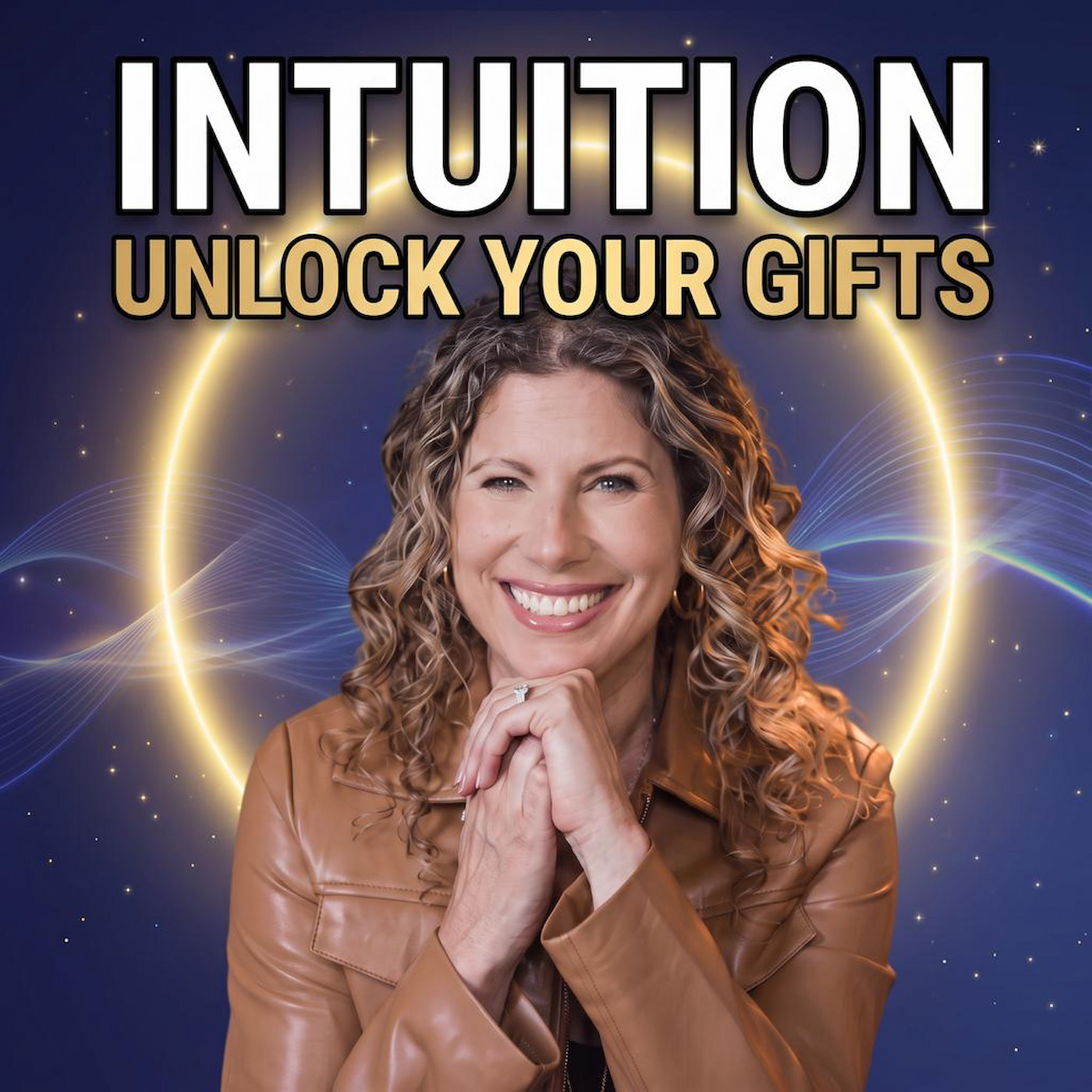
In episode 624 of Soul Elevation, Julie Reisler talks about how to trust your intuition, which will change the way you navigate your life. Julie is an intuitive coach, spiritual teacher, TEDx speaker, author of Get a PhD in YOU, and Georgetown University faculty member. Julie helps people reconnect with their inner wisdom, intuition, and authentic selves.
This conversation explores intuition, manifestation, surrender, worthiness, the wisdom of the body, and what happens when we stop trying to figure everything out with our analytical minds.
Julie says that intuition isn't something reserved for a select few. We all have the capacity to connect with our inner guidance, but that communication can show up differently for each person.
For Julie, intuitive information can come through seeing, hearing, sensing, or simply knowing. She describes the process as connecting with the soul or Higher Self and allowing information to come through rather than forcing it. Julie demonstrated how this works for her in real time during our recording. Ideas and insights seemed to arise organically as we talked, creating an experience of being in the flow rather than consciously trying to produce an answer.
This important point is that intuition doesn't always come like a voice telling you what to do. Sometimes it comes via a bodily sensation, a feeling, an image, a sudden knowing without knowing how you know, or a sense of being drawn toward something.
You have to learn to recognize your own intuitive language.
Why We Often Don't Trust Our Intuition
We have been conditioned to overvalue analysis. Julie shared an Einstein quote describing the intuitive mind as the sacred gift and the analytical mind as the faithful servant. The problem is that we have reversed those roles.
Our analytical mind is, of course, incredibly useful. But it isn't necessarily designed to tell us what is most deeply aligned for us. As such, overthinking can become a problem.
You may receive a nudge, such as Go to that event. or Reach out to that person.
Then your mind starts asking, Does this make sense? or What if it doesn't work?
Overthinking and self-doubt are common things that interfere with intuitive guidance. We don't want to eliminate the analytical mind. But we do want to learn how to let intuition and analysis work together.
Your Body Can Help You Hear Your Intuition
Your body is constantly giving you information. You might feel yourself subtly but literally leaning toward something. You might notice butterflies in your stomach. You might feel expansive, contracted, energized, heavy, open, or closed.
Julie talks about becoming curious about these signals rather than immediately overriding them. She gave a simple everyday example: even something as ordinary as choosing what to eat or drink becomes an opportunity to notice what your body is communicating. She shared that this very thing had happened to her before we started recording. She wanted a snack, and part of her wanted something that her body told her was not a good idea.
Developing a relationship with your body and becoming more aware of the information it provides is an important opportunity. Julie explained that tapping into your inner wisdom can build a greater sense of agency and sovereignty in your life.
Manifestation Isn't Just About Thinking Positive
We also talked about manifestation and why sometimes we can want something deeply and still feel like we're not getting anywhere. Julie made an important point that a key to manifestation is where you're manifesting from. She shares that manifestation is not about thinking hard enough about what you want. Instead, you've got to bring the heart into the process.
When your vision, emotions, intuition, and deeper desires are connected, you shift from manifestation being trying to control every detail and into becoming aligned with what you're calling into your life.
This also connects to worthiness.
Julie talked about the importance of clearing the blocks that can prevent us from receiving what we think we want. Practices such as mindfulness, meditation, quiet, creativity, and connecting with the soul can help us reconnect with our inherent worthiness.
She also shared that there's a difference between setting an intention and trying to control the outcome. Julie emphasized the importance of surrenderand releasing the need to figure everything out. We must detach from the outcome while remaining open to intuitive nudges.
Set the intention. Listen for the guidance. Take inspired action. Release the need to control how it unfolds.
That last part can be difficult. Especially when you've worked hard towards a particular outcome, surrender can feel like giving up.
But surrender isn't necessarily passive.
In fact, Julie and I talked about how important it is to remember that we're still in a physical body. Sometimes intuition tells us to move, and that action is working towards the bigger manifestation..
You may get the nudge to attend a seminar, make a phone call, have a conversation, take the leap.
The surrender is not about doing nothing; it's releasing the demand that you already know exactly where the action will lead.
Follow the Nudge, Even When You're Nervous
Julie reinforced that intuition doesn't necessarily mean you'll feel completely comfortable. Sometimes the intuitive yes comes with butterflies, requires courage, and stretches you beyond the version of yourself you already know.
Julie talked about developing your "courage muscle" as you learn to dance with the unknown. We can mistakenly assume that if something is divinely guided, it should feel easy. But remember that growth doesn't always feel easy. A new chapter can feel exciting and terrifying at the same time.
Learning how to trust your intuition doesn't mean you'll never experience doubt or fear. Rather, you learn to recognize that fear doesn't necessarily mean "no." Sometimes fear simply means you're stepping into something new.
You don't have to wait for a dramatic spiritual awakening to begin developing your intuition. Start with very small decisions. Before immediately asking someone else what they think, pause and ask yourself: What do I actually feel?
Before making a decision, notice your body's response. Before dismissing an idea because it doesn't make logical sense yet, give yourself space to explore it. When you get a nudge, write it down. Spend a few minutes in silence. Meditate. Create. Walk in nature. Notice synchronicities. Pay attention to what lights you up and what causes you to contract.
Over time, you're building a relationship with your own inner guidance. Julie describes this as something that takes time and attention, much like developing any relationship.
People-Pleasing and Self-Doubt
Julie shared that many people receive an intuitive signal but then immediately override it because they want to be liked, accepted, or approved of. This creates a disconnect between what you know internally and how you actually live. Learning to trust yourself can therefore become an act of sovereignty.
It can mean speaking when you have something to say, or setting a boundary, or making a decision that doesn't make sense to everyone else, or allowing yourself to be seen, or choosing what is right for you rather than what will make everyone else comfortable.
And sometimes, trusting your intuition means trusting that you are capable of handling what comes next.
Intuition isn't about becoming someone else. It's becoming more deeply connected to who you already are and remembering that beneath the conditioning, expectations, fear, overthinking, and self-doubt, there is an inner knowing that can guide you.
Julie has built much of her work around helping people discover what she calls their "You-est You," the most authentic expression of who they are. Her work brings together intuition, spirituality, mindfulness, and practical personal development.
If you've been wondering how to trust your intuition, how to distinguish intuitive guidance from overthinking, or how intuition can support manifestation and conscious creation, I think you'll get a lot from this conversation with Julie.
She shares personal stories from her own spiritual awakening, talks about developing her intuitive gifts, and offers practical ways to begin listening to your own inner guidance.
You are Receiving Activations, Even When You Don't Realize It